House of Many Wishes
The LuminariesThe House of Many Wishes is Lydia Wells’s gambling and fortune-telling establishment in Dunedin, and more than a backdrop to the novel’s intrigues. Its parlour, wheel, and private gatherings connect the public promise of luck with Lydia’s deliberate control of chance and with Anna Wetherell’s changing position in the household. The establishment offers company and opportunity, but its welcome is governed by rules, valuations, and secrets.
Setting and rooms
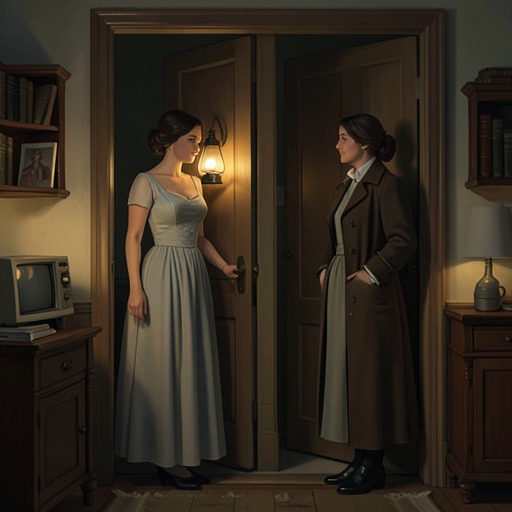
The House of Many Wishes is associated with Cumberland Street in Dunedin. Its downstairs parlour contains velvet booths, a bar, card tables, a gambling wheel, and a small enclosed space where Lydia sometimes tells fortunes for a fee. Anna sees the room soon after arriving in Dunedin, when Lydia shows her around. She is invited to try the wheel herself; its needle approaches the jackpot and passes it. The room thus introduces the house through both its tangible furnishings and the promise of a prize that remains just out of reach.
The parlour’s uses are not confined to gambling. Lydia holds evening gatherings there, and the house becomes a place where men arrive to socialize and play. The change from the room Anna first sees in daylight to its use at night marks the distinction between an orderly domestic interior and a business that operates through private entertainment. The novel presents these functions together rather than treating the establishment as simply a residence or a public gaming room.
A business built around chance
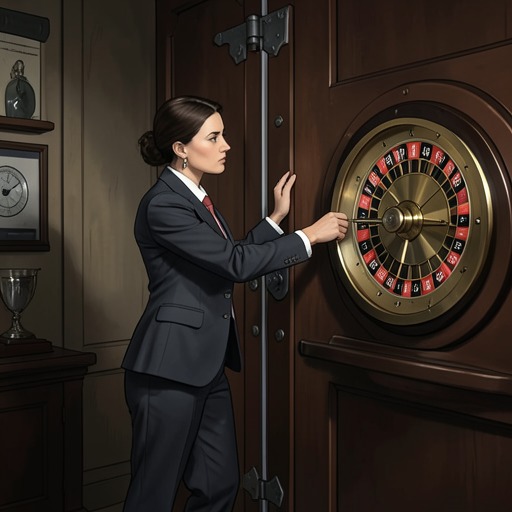
Lydia tells Aubert Gascoigne that she has owned a gambling house for ten years. She explains that her wheel has landed on the jackpot only once, when grit jammed its pivot. Ordinarily, the wheel is weighted so that the prize beside the jackpot falls under the arrow, while greased pegs help the arrow slide past the winning number. The near miss is part of the arrangement: it encourages players to keep spending in hope of a different result.
The wheel makes the house’s central contradiction concrete. Its patrons encounter a game that appears to offer chance, while Lydia has arranged its mechanisms to steer the outcome. The one exceptional jackpot does not disprove that design; it is explained as the result of an accident. Elsewhere, fortune-telling offers another way to speak about uncertain futures. At the House, gambling and prediction sit alongside one another, turning luck into both entertainment and a source of income.
Anna’s place in the house
The establishment is also part of Anna Wetherell’s history with Lydia. The women had become close during Anna’s earlier stay at Lydia’s lodging house in Dunedin. Dick Mannering had seen them together at the House of Many Wishes and had first engaged Anna to work for him there. When Lydia later meets Aubert Gascoigne and learns that Anna is in Hokitika, she arranges a shopping expedition for Anna through him. These connections make the house one link in a longer relationship between the women, rather than merely the setting of their reunion.
After Anna returns to Lydia’s household in Dunedin, she is introduced gradually to the establishment’s work. She first sees its parlour and wheel, but Lydia does not immediately invite her to the evening gatherings. Anna watches the arrivals from her bedroom and, after several days, tentatively asks whether she may tend the bar. She does so nightly under two restrictions: patrons may not address her directly, and she may not dance. The rules establish the terms on which Anna is allowed into the house’s public life, while keeping her role carefully bounded.
Crosbie Wells explains that Lydia’s restrictions are intended to raise Anna’s value by making the patrons wait. The comment exposes a commercial calculation within what might otherwise appear to be protective or hospitable arrangements. The House therefore gives Anna both a place in Lydia’s orbit and a position shaped by other people’s judgments about her desirability and future prospects.
A setting for concealed dealings
The House’s social gatherings also provide cover for consequential business. On one occasion, while Anna entertains Crosbie Wells there, Lydia is at the Hawthorn Hotel; later, Francis Carver arrives at the Cumberland Street house during a gathering. He tells Lydia that a sale has been completed and that the deed is signed, with Alistair Lauderback being watched until morning. The party continues around this exchange, placing private arrangements within the ordinary bustle of the establishment’s entertainment.
A separate scene at the same Cumberland Street address begins with a delivery for Lydia: a pint-sized bottle wrapped in brown paper and stamped with the mark of a chemist on George Street. Crosbie Wells tells Anna to answer the door. The bottle’s arrival brings an outside transaction into the domestic space, where Lydia, Anna, and Crosbie are already caught in a strained household relationship. The house is repeatedly a place where information, objects, and people arrive under one description while carrying other implications.
Narrative significance
The House of Many Wishes gathers the novel’s concerns with fortune, performance, and control into a single setting. Its wheel makes the manufacture of luck visible; its fortune-telling gives uncertainty a social form; and its gatherings allow private arrangements to proceed alongside public amusement. For Anna, the house is at once a remembered place of closeness with Lydia, a route into work, and an environment whose rules regulate how she may be seen and approached. Its apparent hospitality does not erase the calculations that shape life within it.